Elevated pro-BNP and low-grade inflammation are associated with low bone mineral density in systemic sclerosis, a case control study
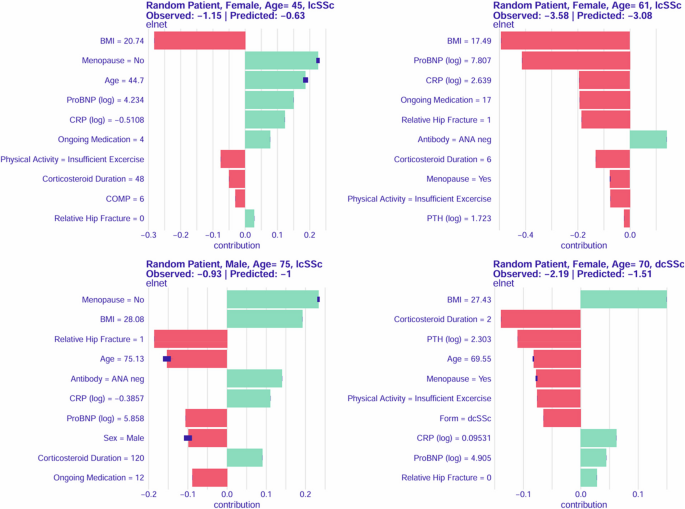 Figure 2: explanations of individual hip T-score predictions. Lillpers et al. (2026), CC BY 4.0. Reproduced without modification.
Abstract
This study investigates bone mineral density in 211 patients with systemic sclerosis and 505 age- and sex-matched controls. Clinical measurements, biomarkers and lifestyle information were analysed using regression models, alongside machine-learning approaches to predict total hip T-score. Elevated NT-proBNP and inflammatory markers were associated with lower bone density, while BMI and NT-proBNP were prominent predictors. Individual Shapley explanations illustrate how measured characteristics contribute to each patient’s predicted T-score. The work connects clinical research with interpretable prediction and highlights the need to consider disease-related factors alongside established bone-health risk factors. Independent validation is needed before these predictive models can support clinical decisions.
Contribution
My contribution included the analysis plan, data analysis and preparation of the figures, as reported in the article’s author contributions.
Selected figure
Figure 2 illustrates how measured characteristics contribute to the predicted hip T-score for four individuals. It connects the study to my interest in patient-level prediction while making the model’s reasoning visible. These research predictions require independent validation before clinical use.

Seyed Morteza Najibi
Statistician
My research interests include statistical machine learning, directional statistics, Bayesian modeling, and non-parametric modeling.